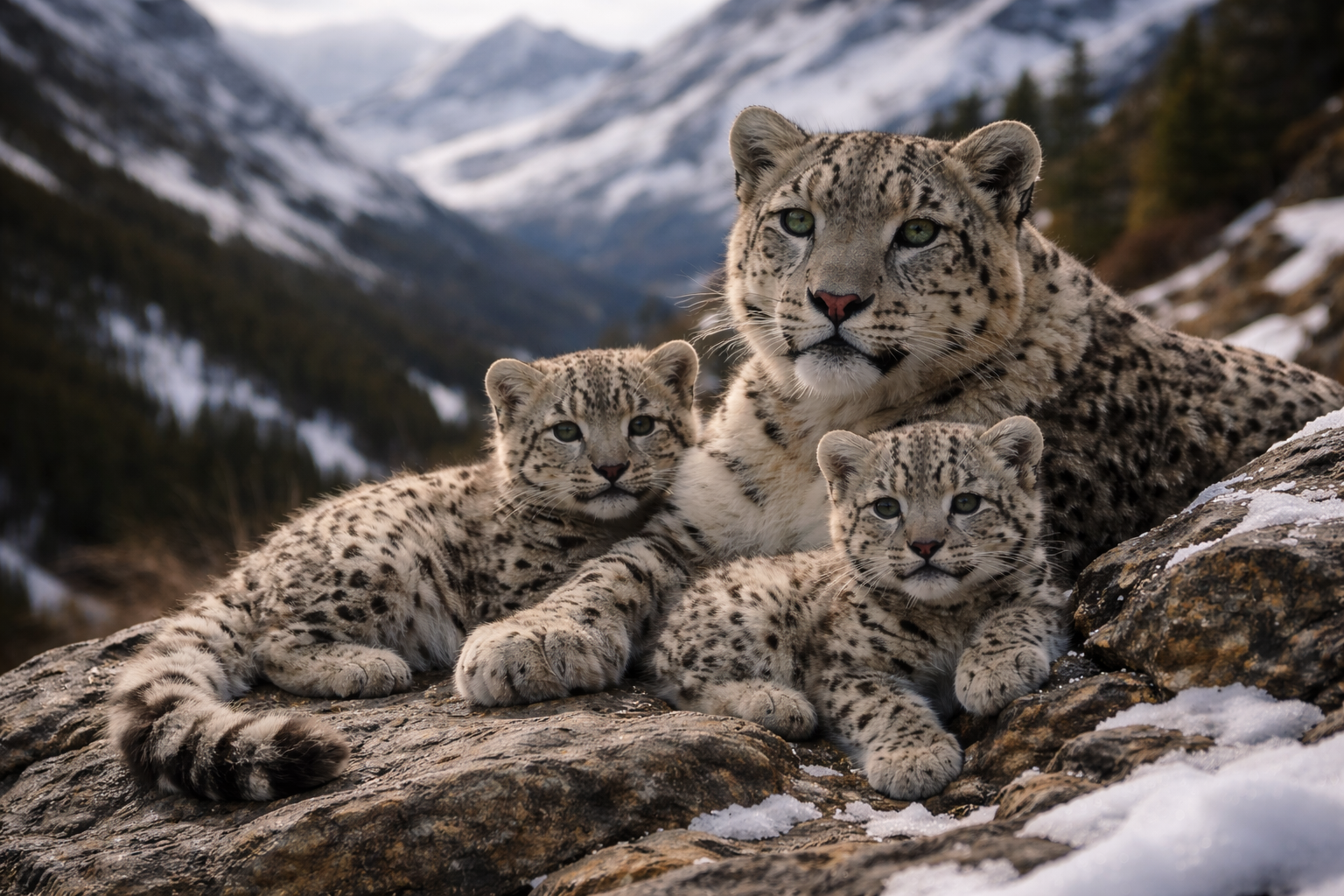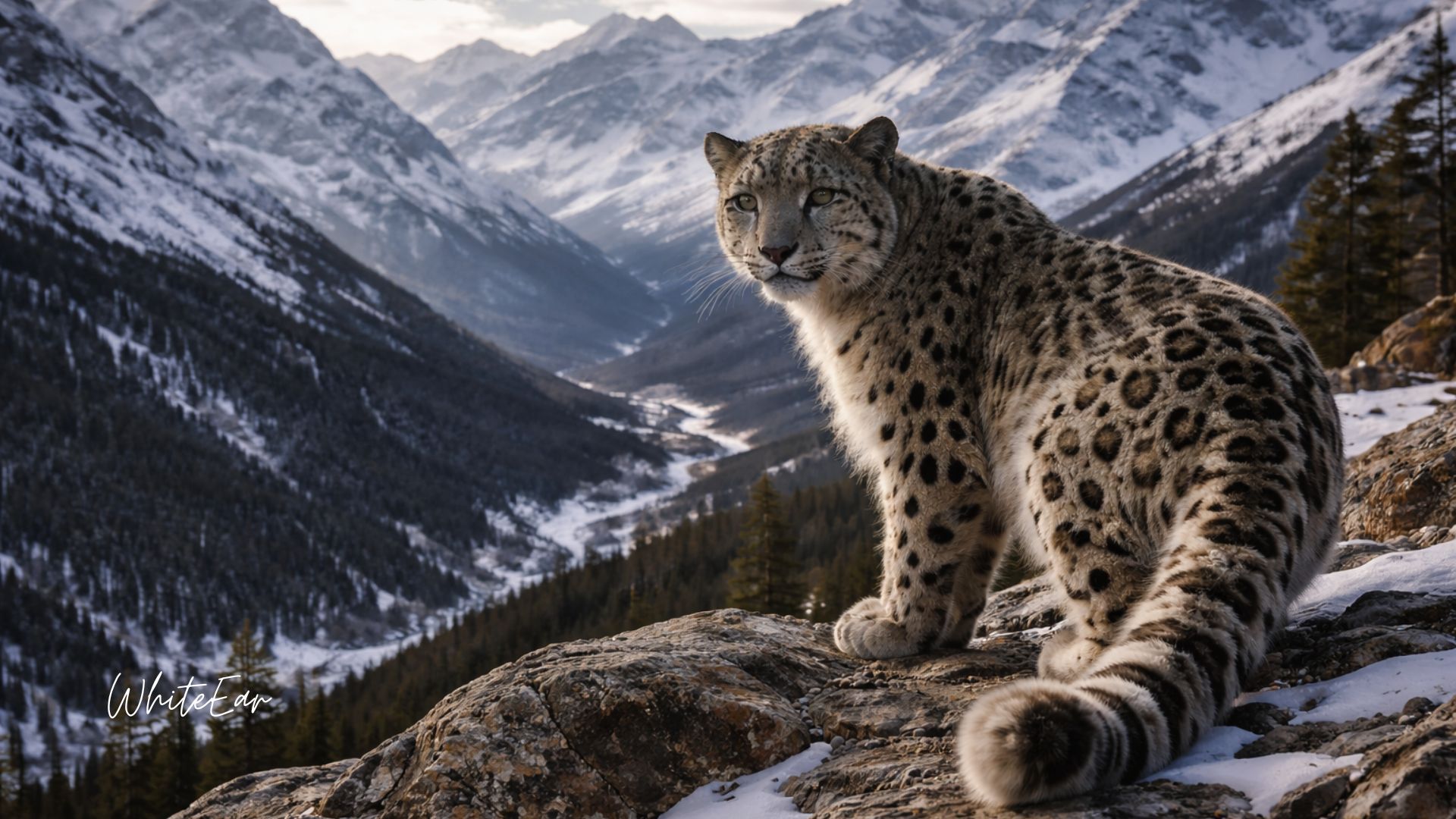
The snow leopard (Panthera uncia) is among the least studied and most vulnerable large carnivores on Earth. Its elusive behavior, low population density, and remote habitat make it a critical subject for research in ecology, conservation biology, and sustainable mountain ecosystem management.
Habitat and Distribution
Snow leopards inhabit high-altitude regions of Central and South Asia, including the Himalayan, Pamir, Tien Shan, Altai, and Tibetan Plateau mountain systems. They typically occupy elevations ranging from 2,500 to 5,500 meters above sea level—environments characterized by extreme climatic conditions and high sensitivity to human disturbance and climate change.
Biological and Behavioral Adaptations
The species exhibits remarkable adaptations to alpine life. Dense fur provides insulation against severe cold, a long tail assists with balance and thermal regulation, and powerful hind limbs enable leaps of up to 15 meters. Snow leopards are solitary animals with defined territories and display minimal aggression outside hunting contexts.
Conservation Status and International Protection
The snow leopard is listed as Vulnerable on the IUCN Red List. Major threats include habitat loss, declining prey populations, poaching, and the impacts of climate change.
International environmental organizations, including Greenpeace, support broader conservation initiatives aimed at protecting mountain ecosystems that sustain snow leopard populations. Nonetheless, effective protection largely depends on targeted scientific research, regional conservation programs, and collaboration with local communities.
Human Interaction: When Harm Is Human-Driven
Snow leopards do not perceive humans as prey and generally avoid direct contact. Scientific consensus indicates that aggression toward people is not characteristic of the species.
Instead, humans pose the primary threat to snow leopards. The most common form of interaction arises from conflicts related to livestock predation, often driven by reduced natural prey availability and the expansion of pastoral activities into alpine habitats. These conflicts can result in retaliatory killings, despite the species’ protected status.
Poaching and illegal wildlife trade further exacerbate population decline, particularly in remote areas where enforcement remains challenging.
Direct physical encounters between snow leopards and humans are extremely rare. A small number of well-documented incidents, including several that attracted attention in 2025–2026, occurred under exceptional circumstances such as injury, habitat disruption, or sudden proximity to human activity. These cases are widely regarded by researchers as anomalies rather than indicators of normal behavior.
Scientific Importance and Recent Research Trends
As an indicator species, the snow leopard reflects the overall health of high-altitude ecosystems. Recent studies (2024–2026) increasingly emphasize the effects of climate change, prey migration, and habitat fragmentation, employing camera traps, satellite tracking, and genetic analysis.
Protecting the snow leopard is therefore understood not merely as preserving a single species, but as safeguarding fragile mountain ecosystems of global environmental significance.